Supreme
The Story
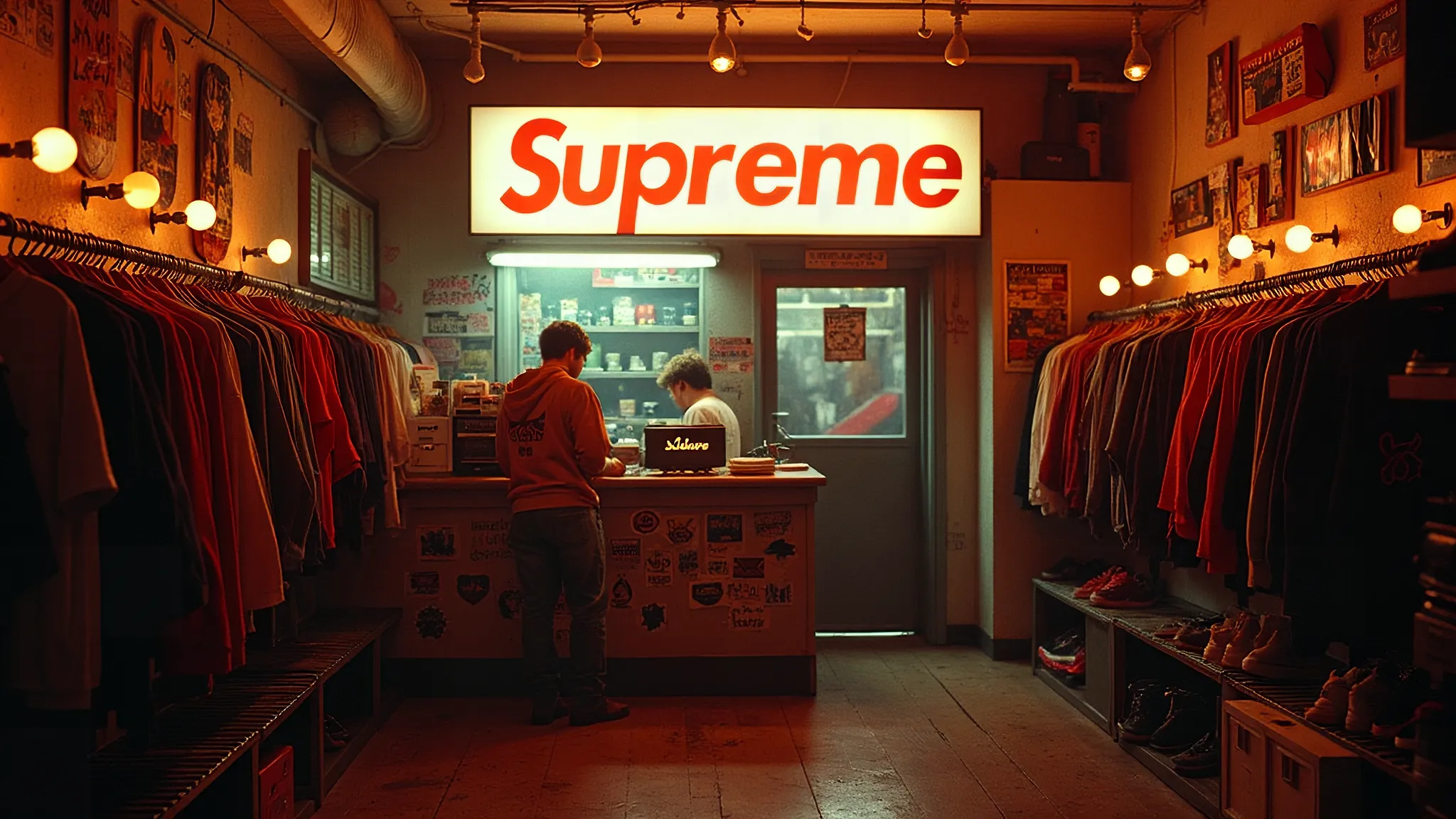
You push through the glass door of the shop on Lafayette and immediately smell the ink from this week's screen-printed drop,a bold box logo on heavyweight cotton that won't be reprinted, the paper stock still crisp and slightly tacky under your fingertips. The line wraps around the block outside, sneakers scuffing concrete, conversations hushed with the anticipation of limited edition, and inside the narrow storefront the walls are lined with numbered prints in protective sleeves, each one dated and signed by the artist. The young clerk behind the counter calls out names from a clipboard, handing over tissue-wrapped packages like small ceremonies, while the radio plays low and the smell of fresh dye mingles with the particular mustiness of a place that takes its releases seriously.
Visual Details
The queue wrapping around the block makes the actual scarcity real; Supreme built its whole empire on convincing people that exclusion feels better than access, and a 1970s streetwear shop is just the original format for that addiction. Every choice here; the bouncer, the single rack, the limited decks; argues that Supreme didn't invent hype culture; it just weaponized something that was already living on skate shop stoops and in underground sneaker communities before the internet made wanting things into a full-time job.


The limited drop model has a 70s analogue in limited edition prints. The queuing culture translates perfectly.
About the MRA Score →