What if Spotify Existed in the 1970s?
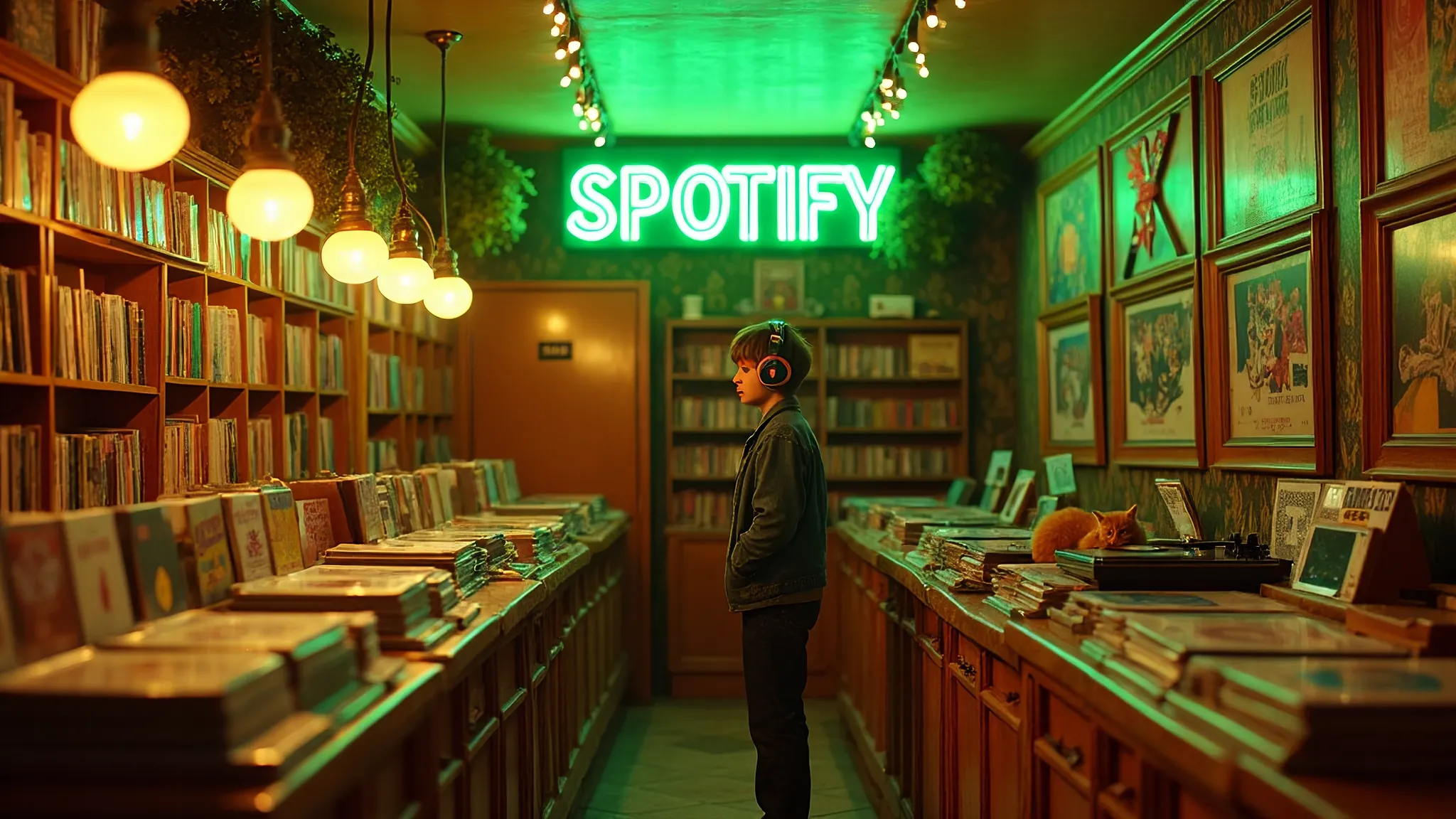
Imagine walking down a busy high street in 1974. Between the record shops and the laundrettes, you spot something unexpected: a record store called Spotify. It shouldn't exist — not for another few decades — but here it is, fitting in perfectly among the brown brick and hand-painted signage of the era.
Step through the beaded curtain into the grooviest record store this side of Sunset Boulevard. Floor-to-ceiling vinyl racks organized by mood, not genre, because the algorithm had not been invented yet but the vibe was already there. A listening booth in the corner lets you preview any album with oversized headphones, and the staff picks board by the door is the only recommendation engine you will ever need.
The Details That Sell the Illusion
Every Modern Retro storefront is built from the visual language of the 1970s — warm tungsten lighting, Kodachrome film tones, wood panelling, and period typography. Here's what makes the Spotify store feel authentic:
- Floor-to-ceiling wooden vinyl racks with handwritten dividers
- Psychedelic green and black colour palette throughout
- Listening booth with padded walls and vintage headphones
- Art deco ceiling with recessed warm lighting
- Staff picks chalkboard with hand-drawn album art
The Absurdity Factor
Part of the charm of Modern Retro is the contrast between what a brand does today and what it would have been in the 70s. Spotify as a record store is perfectly natural — the kind of shop you'd walk past without a second glance, never knowing that decades later it would become something entirely different.
That tension between the familiar and the impossible is what makes these images work. They're not parodies — they're love letters to an era when everything was a bit more tactile, a bit more human, and a lot more orange.
Like what you see?
View the full store page, order a print, or create your own retro storefront.