What if Revolut Existed in the 1970s?
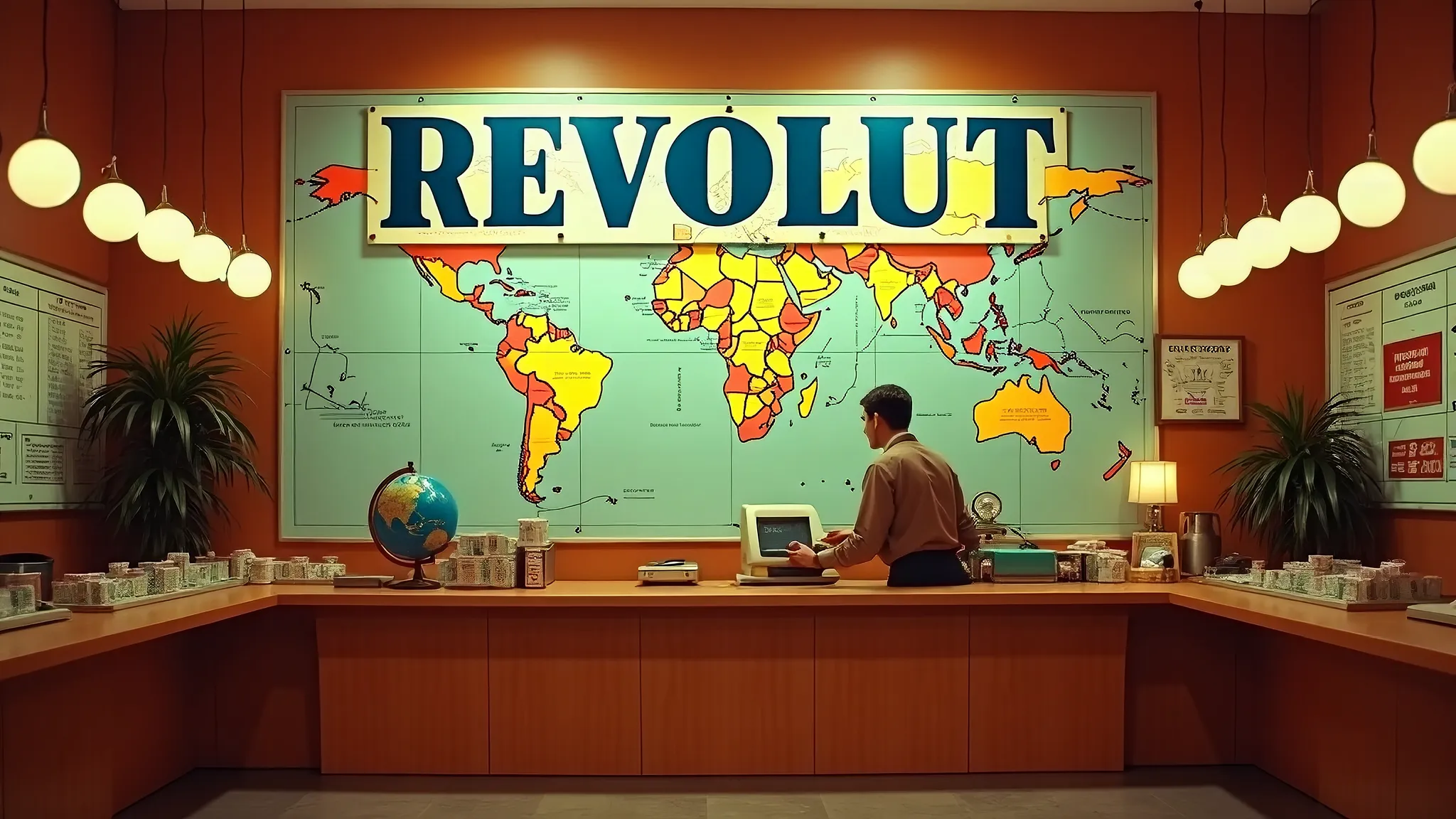
Imagine walking down a busy high street in 1974. Between the record shops and the laundrettes, you spot something unexpected: a money transfer bureau called Revolut. It shouldn't exist — not for another few decades — but here it is, fitting in perfectly among the brown brick and hand-painted signage of the era.
A colourful world map dominated the entire back wall, with pins and string marking every country they could send money to. Exchange rates clicked over on mechanical flip boards while the clerk counted out foreign banknotes with practised fingers. A spinning globe sat on the counter beside stacks of international transfer forms. This was global finance, handled locally.
The Details That Sell the Illusion
Every Modern Retro storefront is built from the visual language of the 1970s — warm tungsten lighting, Kodachrome film tones, wood panelling, and period typography. Here's what makes the Revolut store feel authentic:
- Colourful world map with country pins and string
- Mechanical flip-board exchange rates
- Spinning globe on the service counter
- Foreign banknotes in glass display
- International transfer forms and ledgers
The Absurdity Factor
Part of the charm of Modern Retro is the contrast between what a brand does today and what it would have been in the 70s. Revolut as a money transfer bureau is perfectly natural — the kind of shop you'd walk past without a second glance, never knowing that decades later it would become something entirely different.
That tension between the familiar and the impossible is what makes these images work. They're not parodies — they're love letters to an era when everything was a bit more tactile, a bit more human, and a lot more orange.
Like what you see?
View the full store page, order a print, or create your own retro storefront.