What if Nike Existed in the 1970s?
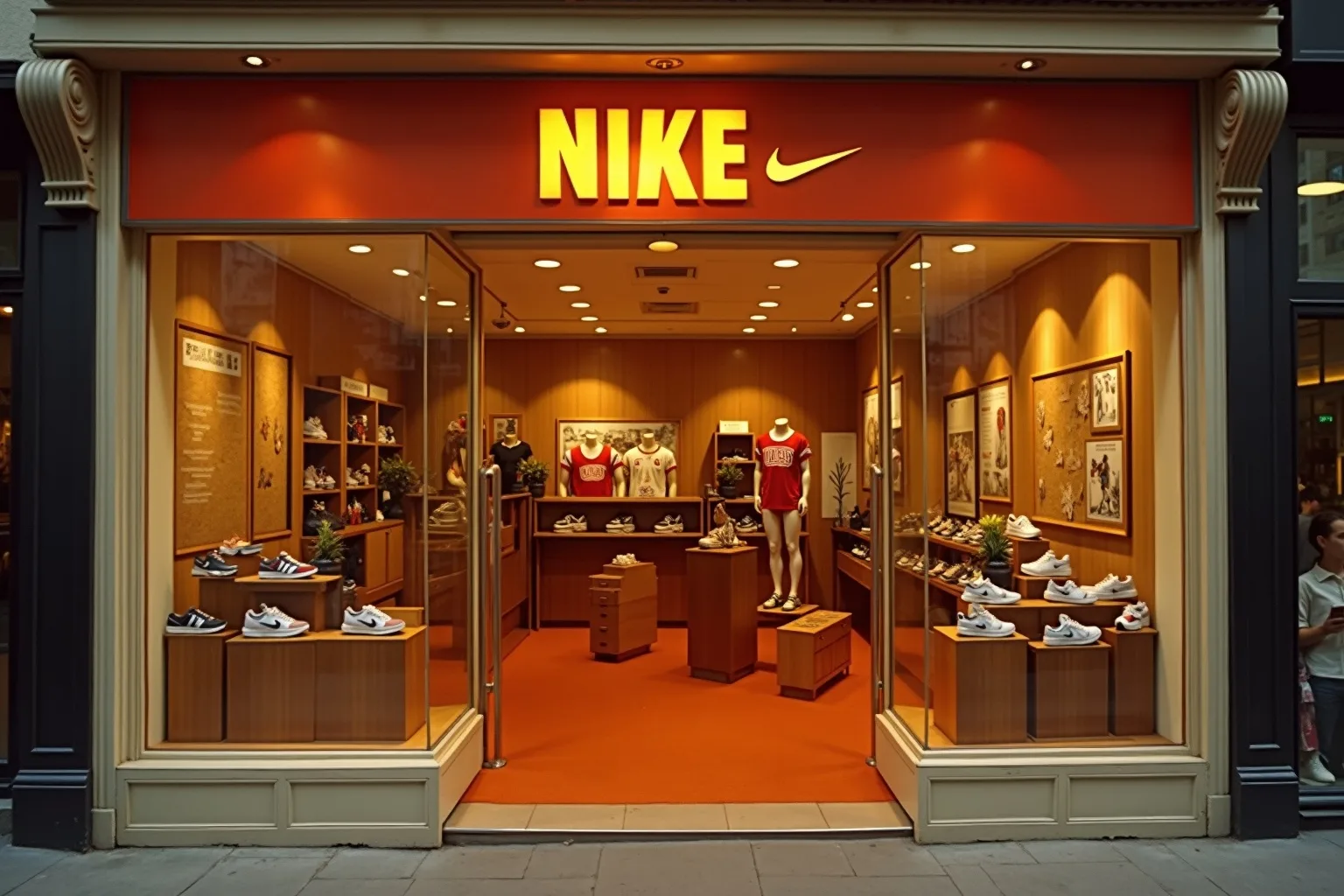
There is a shop on the high street that the local running club swears by. It is called Nike, and its owner — a wiry fellow with a stopwatch permanently around his neck — opened the doors in 1964 under a different name. Blue Ribbon Sports, he called it then. Nobody remembers that now. What they remember is the orange carpet, the smell of fresh rubber, and the fact that he once told a customer her left foot was a half-size bigger than her right before she had even taken her shoes off.
The shop itself is a temple to the serious runner. Trainers are displayed on wooden pedestals like artefacts in the British Museum, each one lit from above by a warm tungsten spotlight. Wire mannequins in the window wear the latest track jerseys and running shorts — bold orange stripes on white, the kind of kit that makes you want to sprint home just looking at it. A cork notice board by the door is pinned thick with local race schedules, fun run flyers, and a polaroid of last month's cross-country champion holding a muddy trophy.
The Details That Sell the Illusion
Every Modern Retro storefront is built from the visual language of the 1970s — warm tungsten lighting, Kodachrome film tones, wood panelling, and period typography. Here's what makes the Nike store feel authentic:
- Running shoes displayed on polished wooden pedestals under spotlights
- Bold orange and white colour palette with dark brown accents
- Wire mannequins modelling track jerseys and running shorts
- Cork notice board pinned with local running club schedules and race results
- Orange shag carpet underfoot and warm tungsten lighting throughout
The Absurdity Factor
Nike in 1976 was not yet the global behemoth it would become. It was still a scrappy upstart out of Oregon, Bill Bowerman pouring rubber into his wife's waffle iron in the garage. The idea of a Nike shop on a British high street in the mid-seventies is just plausible enough to be unsettling — you can almost hear the bell above the door, almost smell the orange shag carpet. That is what makes Modern Retro work. Not parody, but possibility.
The tension between what Nike is now and what it might have been then — a single shop run by an obsessive who could diagnose your pronation by watching you walk to the counter — is what gives this image its charm. It is a love letter to an era when every shop had a specialist, and every specialist had a story.
Like what you see?
View the full store page, order a print, or create your own retro storefront.