What if Apple Existed in the 1970s?
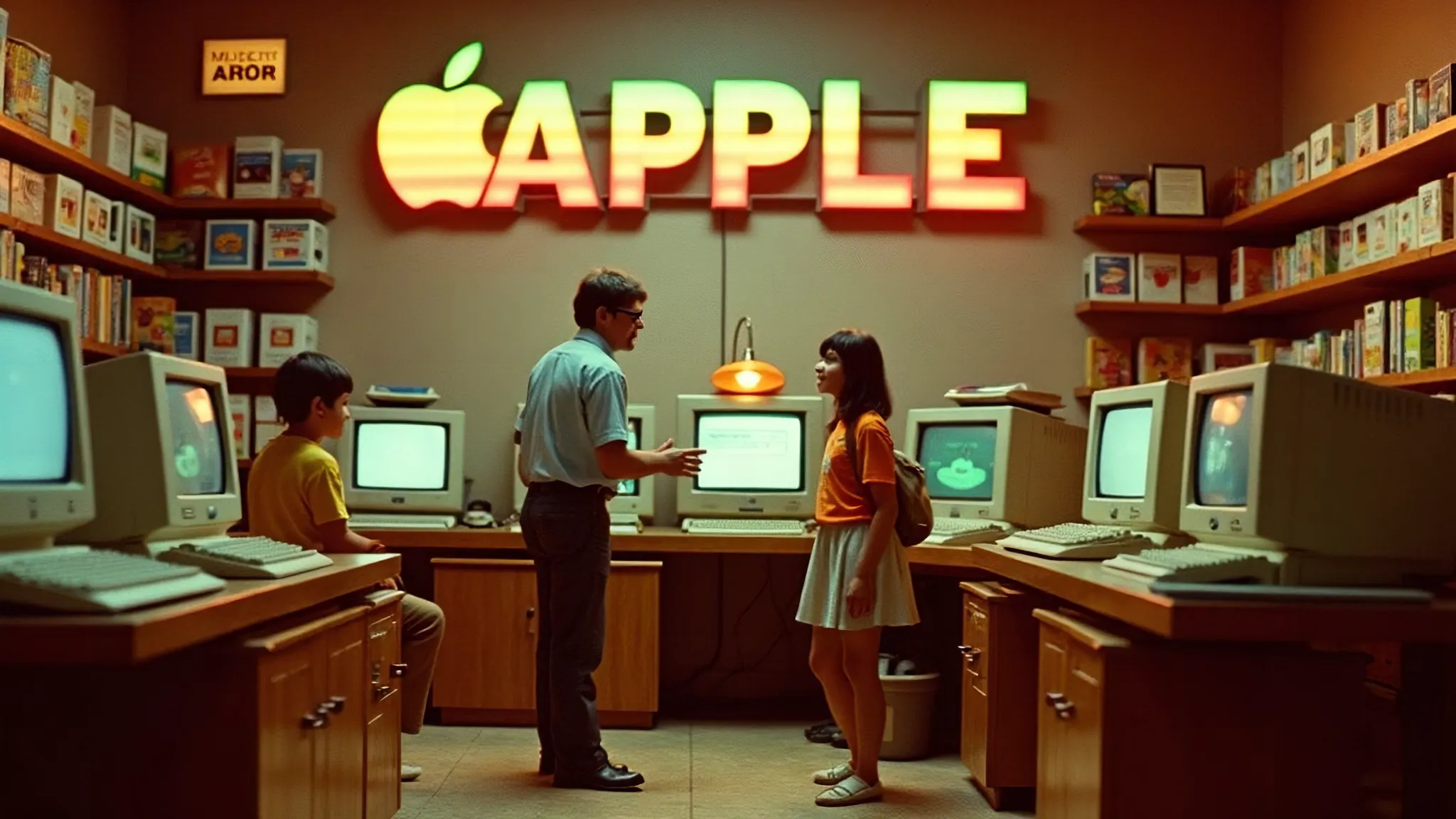
Imagine walking down a busy high street in 1974. Between the record shops and the laundrettes, you spot something unexpected: a computer store called Apple. It shouldn't exist — not for another few decades — but here it is, fitting in perfectly among the brown brick and hand-painted signage of the era.
The rainbow apple glowed in the window like a beacon for the curious. Inside, colourful CRT monitors sat on wooden pedestals, each one running a different demo that made visitors gasp. A garage dream made storefront before the world caught on, where the staff wore jeans and talked about changing the world one personal computer at a time. The Genius Bar was just a guy named Steve who really knew his stuff.
The Details That Sell the Illusion
Every Modern Retro storefront is built from the visual language of the 1970s — warm tungsten lighting, Kodachrome film tones, wood panelling, and period typography. Here's what makes the Apple store feel authentic:
- Rainbow Apple logo illuminated in the storefront window
- Colourful CRT monitors on handcrafted wooden pedestals
- Clean, minimalist shelving amid warm wood tones
- Stacks of printed manuals and software on floppy disks
- A demo station where customers could try typing commands
The Absurdity Factor
Part of the charm of Modern Retro is the contrast between what a brand does today and what it would have been in the 70s. Apple as a computer store is perfectly natural — the kind of shop you'd walk past without a second glance, never knowing that decades later it would become something entirely different.
That tension between the familiar and the impossible is what makes these images work. They're not parodies — they're love letters to an era when everything was a bit more tactile, a bit more human, and a lot more orange.
Like what you see?
View the full store page, order a print, or create your own retro storefront.