What if Airbnb Existed in the 1970s?
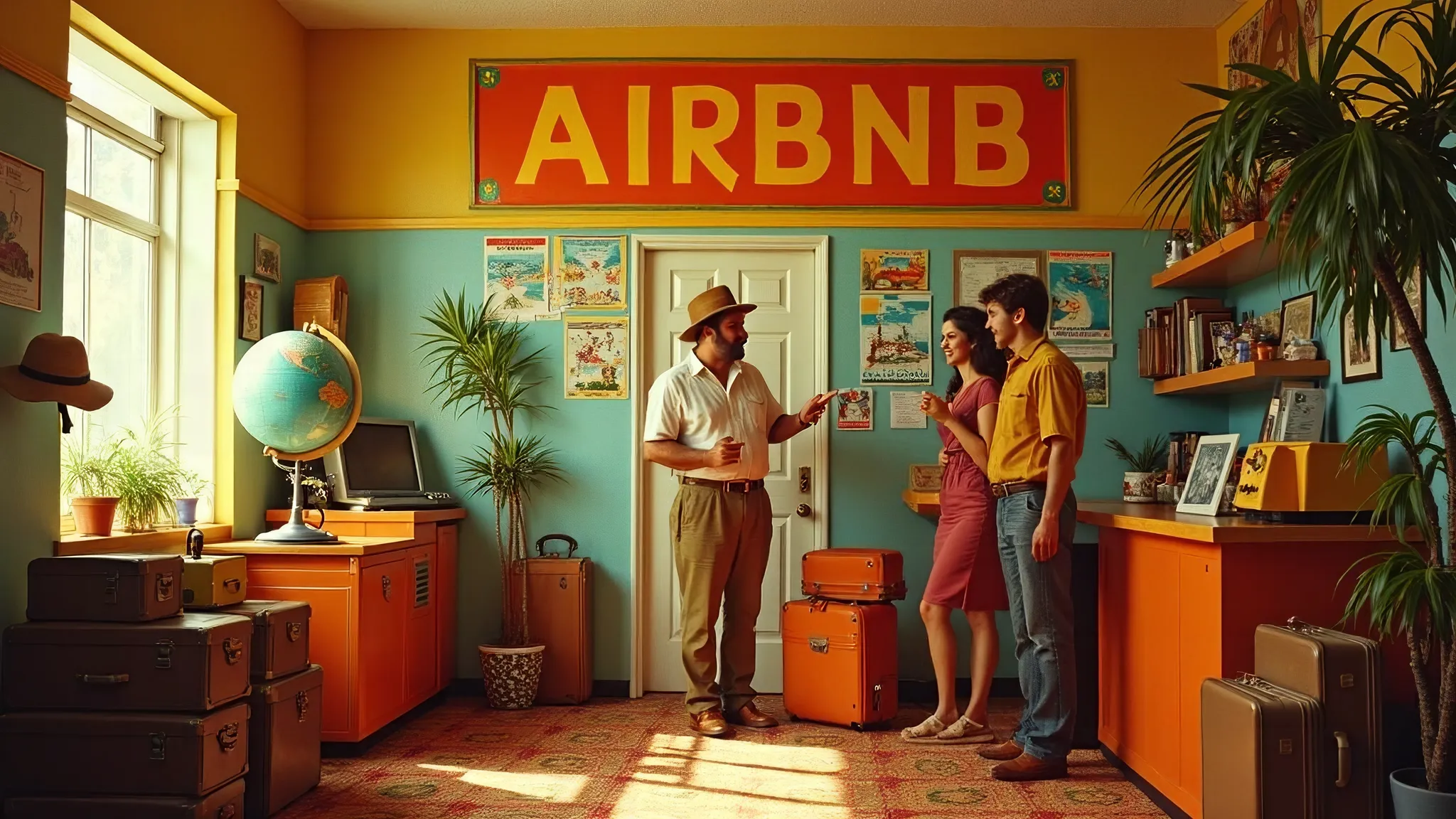
Imagine walking down a busy high street in 1974. Between the record shops and the laundrettes, you spot something unexpected: a travel agency called Airbnb. It shouldn't exist — not for another few decades — but here it is, fitting in perfectly among the brown brick and hand-painted signage of the era.
Wood-panelled warmth and a wall of pinned Polaroids from happy travellers greeted you at the door. Behind the desk, an agent with a rotary phone and a Rolodex full of hosts could book you a spare room in Provence or a houseboat in Amsterdam. Every trip was planned face to face, sealed with a handshake and a carbon-copy receipt, and the only review system was a guest book with a pen on a string.
The Details That Sell the Illusion
Every Modern Retro storefront is built from the visual language of the 1970s — warm tungsten lighting, Kodachrome film tones, wood panelling, and period typography. Here's what makes the Airbnb store feel authentic:
- Rich wood paneling with pinboard walls covered in travel photos
- Globe on the front desk beside a rotary telephone
- Vintage travel posters for exotic destinations
- Orange and brown upholstered waiting chairs
- Warm overhead lighting with amber-tinted fixtures
The Absurdity Factor
Part of the charm of Modern Retro is the contrast between what a brand does today and what it would have been in the 70s. Airbnb as a travel agency is perfectly natural — the kind of shop you'd walk past without a second glance, never knowing that decades later it would become something entirely different.
That tension between the familiar and the impossible is what makes these images work. They're not parodies — they're love letters to an era when everything was a bit more tactile, a bit more human, and a lot more orange.
Like what you see?
View the full store page, order a print, or create your own retro storefront.